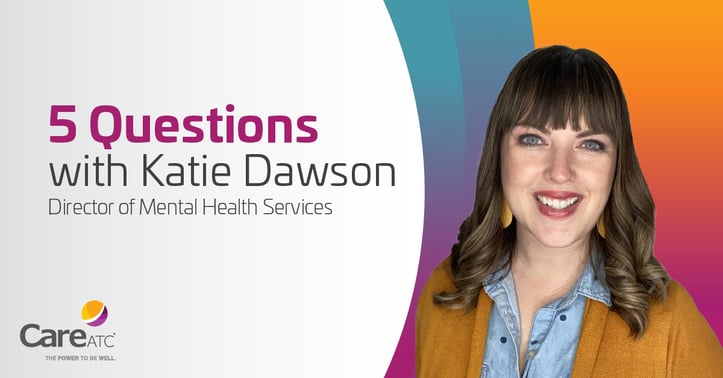
After six years at CareATC, and with experience in hospice, neonatal intensive care, and adolescent therapy, Katie Dawson understands what it means to help patients navigate life's most challenging moments. We chatted with her about why mental health is so prominent right now, how CareATC works to remove barriers to treatment, and what it truly takes to build a stigma-free culture of wellbeing in your organization.
1. Why is mental health care so important right now, and why should employers be paying attention?
I think this is a great question because as we're looking at the state of the world right now, mental health is impacting every area of a person's life. This includes their physical health, their relationships, their productivity, and their overall well-being. All of these things are impacted. We continue to see this increased rate of anxiety and depression, burnout, and stress in the health centers and everywhere. So employees are looking for support. They're looking for access to mental health care that's timely, that's accessible, that doesn't have barriers, and is connected to their everyday lives.
When we're looking at this, employers need to be aware that mental health is no longer just a benefit offering. It really becomes part of that critical area to help support healthy and engaged workforces. We find that when employees have access to mental health services, organizations as a whole see a huge improvement in their engagement, their retention, their productivity, and just their overall workplace culture. Early access to care for mental health really can help reduce their overall health care expenses. And over time, addressing these concerns can be preventative so they don't escalate into urgent crisis situations that also show up on their health care cost and claims. Employers that really invest in a culture and environment of mental health are sending a really strong message that they value the lives of the people that work there. It really shifts the culture and the morale of their environment by having access to mental health services.
2. What are the biggest obstacles keeping people from accessing mental health care, and how does CareATC work to remove them?
I've asked several employees that we work with, what do they feel their biggest barrier is? And unanimously, what I'm hearing is the biggest barrier is simply just access. When we're looking at individuals that are going out into the community and using their insurance, they are faced with really long wait times. There might be limited provider access, so that availability of trying to get in, along with really high out-of-pocket costs. Some locations aren't taking insurance, so you're having to pay out-of-pocket for that instead of using your insurance. Sometimes it's just confusing to navigate the traditional healthcare system and know where to go and who to ask those questions to. So those are challenges. On top of that, there's still stigma when it comes to mental health. And a lot of people are hesitant to reach out because of the stigma that is around mental health and seeking that care. So here at CareATC, we really try to focus on identifying and removing those barriers and understanding why people wouldn't come in to make it easier to access that care earlier, and make it more personalized and tailored to them.
Then they feel more connected to their medical home because their primary care provider is right there. We really focus on not only just the mental health approach, but that overall integrated care support through our wellness centers. Looking at virtual options and helping employees access that care in a very familiar and convenient environment, maybe at home to take that call from the mental health provider in a confidential way, or that might mean coming into our health center where your primary care is next door and you can quickly access them.
Another element that we do is really focus heavily on awareness and engagement. This is through different educational campaigns, webinars, and making sure patients know that there are resources available to them. Manager training has been really important and valuable over the past couple years, as well as ongoing communication efforts to let people know this service is available to them. By normalizing the conversation around mental health and helping employees be aware of the resources that are available to them, it has been really helpful. Our goal is to help meet people where they're at, creating those care pathways that feel approachable and supportive instead of feeling overwhelming and daunting, causing them to not seek the care for their mental health.
3. What makes CareATC's approach to mental health treatment distinct from what employees might find through a traditional insurance plan?
I think our biggest difference is accessibility in our care integration. Traditional insurance models, they really do feel fragmented. Employees are left searching. They're trying to find a provider on their own, not sure where to go, navigating these different care networks and feeling disconnected to the care home. Then they have really long wait times, weeks or months to get an appointment for care. Our approach is designed to simplify that experience for employees and connect them to mental health that addresses their overall wellness, including the primary care services. Integrating that mental health to the broader health care experience, we really feel like we're able to help support that whole person. Instead of just treating mental health as a separate issue or just those symptoms separately, we're able to do that wraparound service and care within that health center. We do place a high emphasis on proactive engagement and treatment, not just focusing on a crisis response or reactive care, but again, going to the people, providing that education and information. It could be educational resources, promotional campaigns, webinars, and these ongoing outreaches that we do help to increase that awareness, which will then increase the utilization of the service. We really believe in going to the people, not waiting for other people to come to us. They need to know what we have available. Most importantly, we strive to create a more personal and supportive experiences where employees feel they are seen and heard, creating a comfortable environment and seeking that care early.
4. What does it actually take for an organization to build a culture where mental health is talked about openly and without stigma?
I really believe it starts with leadership at the top bringing that awareness and consistency. With those two things, organizations are focused on building trust. When leaders openly acknowledge that mental health does matter, and when support is
reinforced through actions, not just statements, that's when you see that culture shift. So you're really creating a culture without stigma. But in order to do that, you have to engage in ongoing education, visible resources, and regular communication. All of those things will help to normalize those mental health conversations. You can't say it one time and expect a huge impact or change. Having the education for our managers is important, and they play an important role in ensuring that the employees know it's okay to ask for help. It's okay to reach out. Making sure the managers know how they can get that support easily and quickly, and helping to make sure there's not a barrier to seeking care. It’s important those leaders and managers are really equipped to know what to say, and they're looking for signs of stress or burnout or crisis type escalation. I don't want them to be therapists. That's not what I need them to be. I'm really helping them to recognize signs and symptoms. To say, okay, I've noticed these things. Now they can respond with empathy and in a supportive way. And then employees are going to feel much more safe from a psychological perspective, knowing that their manager cares, and their manager knows how they can get help and where to go get that help as well. We feel that organizations that are really the most successful in this area are the ones that view mental health as truly a part of that overall culture. It's embedded into what they're doing. It becomes that whole wellness strategy that they're focusing on, not just that one-time initiative or a monthly engagement, but it's a consistent conversation from leadership and through consistent messaging. Our clients that partner with us in that way are truly seeing the highest utilization, awareness, and engagement, and the results are truly changing their culture and making an impact on their population.
5. Can you share a moment where you saw CareATC's mental health support genuinely change things for an individual or an organization?
We get net promoter scores on a monthly basis where employees can share feedback on the care they receive. Reading those on a weekly and monthly basis and seeing the life-changing stories is emotional and it's eye-opening. It brings so much awareness to the amazing work that our therapists are doing every day in those sessions. Lives are changed. I also think one of the most meaningful things that we see is when employees that might have delayed seeking help finally take that initiative or have the courage to reach out and they feel comfortable. Then they meet with our therapist, and they have a life-changing experience. They feel as though they found a way that it was approachable, it was visible through their employer, and they stepped out and made that change.
We've seen situations where individuals have been struggling with anxiety and burnout that were able to get connected to care earlier than they would have otherwise. Because of all this awareness of services and knowing where to go, their manager was able to direct them how to get help. Last year, we did a survey of 100 people that were engaged with mental health services. And almost 100% of these individuals were positively impacted by addressing their mental health. From work performance, relationships, view of self and self-esteem, and just their overall quality of life. And all four categories, unanimously, all of these people said, yes, my life is changed because of this. We've had people writing that I'm no longer suicidal. I've been able to save my marriage. My family is able to stay together. And you can't put a price on those life-altering things that have happened. From an organizational perspective, we've seen employers be more proactive at engaging in their mental health, which is really good. Through those engagement conversations of leadership reaching out and letting people know the resources that they have available, we’ve seen that shift from simply offering the benefit to truly creating that culture of support and change in care, focusing on mental health mattering. So culture shifts, these have long-lasting impacts with our employees. They're feeling more connected. The leaders are more informed, so they know what to do. They know how to help people. And it becomes part of the conversation in a really positive, meaningful way. And employees feel it as well that their mental health really does matter within the organization. And that's priceless.