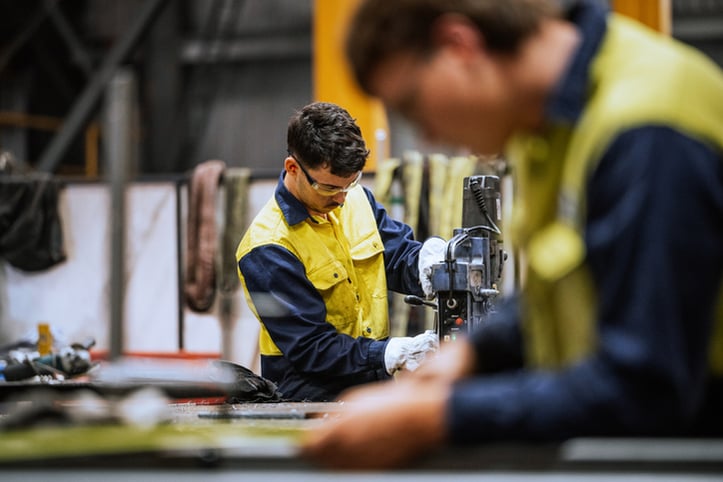
If you manage benefits for a manufacturing workforce, you’ve probably noticed a frustrating trend: ER claims that seem preventable keep showing up anyway.
Here’s what most people miss: high ER utilization in manufacturing isn’t about employees making bad decisions. In most cases, it’s a predictable response to a healthcare system that doesn’t align with how manufacturing employees actually work.
The good news? Fix the access problem, and behavior changes.
The ER Isn’t the Problem, It’s a Symptom
From an HR perspective, ER overuse looks like rising claims costs, volatile renewals, and after-hours visits for things that probable aren’t emergencies.
But from an employee’s perspective, the ER is often the only place that’s open when medical issues arise. When primary care isn’t accessible, the ER becomes the default option.
Why Manufacturing Sees Higher ER Utilization
1. Shift Work Limits Primary Care Access
Manufacturing schedules and traditional primary care office hours are incompatible. When primary care offices close at 5 p.m., employees working evenings, nights, or rotating shifts are left with few options.
When symptoms present after hours, the ER is often the only door that’s open.
2. Physically Demanding Roles Lead to Acute Issues
Manufacturing jobs are physically demanding. Minor injuries, muscle pain, or joint issues are common, and they don’t only happen during business hours. What starts as something manageable can escalate fast when there’s no timely way to be seen.
3. Delayed Care Turns Small Issues into Expensive Ones
Many employees try to “push through” their symptoms. Without easy access to care, they wait, sometimes too long. By the time they finally seek help, the issue feels urgent. And urgent usually means the ER.
What this Actually Costs HR
ER visits are one of the most expensive entry points into the healthcare system. Even visits that aren’t true emergencies carry significant costs compared to primary care. For HR, that usually means higher overall claims spend, less predictable cost trends, and increased pressure during renewal conversations.
Why Traditional Fixes Don’t Move the Needle
Education alone doesn’t change behavior. Employees generally know that the ER is expensive. However, that awareness doesn’t help when there’s no alternative available for after-hours care.
Telehealth helps, but it’s not a complete solution. Virtual care is useful for certain things, but it can't fully address musculoskeletal issues, ongoing chronic condition management, or the need for a long-term, trusted care relationship with a provider who knows your history.
Network changes create friction without solving access. Narrower networks and more restrictions might reduce options on paper, but they don’t solve the underlying access problem. Often, they just create more confusion for employees and more communication work for HR.
How Onsite Primary Care Changes the Pattern
Care becomes available when people actually need it. With same-day or next-day access and health center hours aligned to shift schedules, employees have a real alternative. When care is accessible, the ER becomes backup for real after-hours emergencies, instead of the first stop.
Real preventive care is possible. Onsite primary care means providers can address issues sooner, manage chronic conditions consistently, and step in before symptoms escalate. Earlier intervention often means fewer late-night ER trips, and lower claims cost over time due to well-managed, otherwise expensive chronic conditions.
Trust promotes utilization. Employees are far more likely to use care when they know the provider, feel listened to, and don’t have to rearrange their entire day to be seen. That trust leads to better engagement—and better outcomes.
What HR Typically Sees After Implementation
Results vary by workforce, but manufacturing employers typically report fewer non-emergent ER visits, lower per-member-per-year costs among engaged employees, more predictable claims trends, and improved employee satisfaction with healthcare access.
The common thread isn’t enforcement. It’s access.
The Bottom Line
High ER utilization in a manufacturing workforce is a signal, not a failure. It tells you that employees need care that fits their schedules, their jobs, and their realities. Reducing ER utilization doesn’t require policing employee behavior or layering on more rules. It requires fixing the access gap. When primary care works, the rest of the system starts to calm down.
Onsite primary care:
- Removes friction instead of adding it
- Supports employees without disrupting operations
- Aligns healthcare access with how manufacturing actually works
When you improve access to primary care, lower ER utilization follows.
References:
Agency for Healthcare Research and Quality. (2023). Preventable emergency department visits. https://www.ahrq.gov
Centers for Disease Control and Prevention. (2022). Work-related health conditions and healthcare utilization. https://www.cdc.gov
Health Care Cost Institute. (2023). Trends in emergency room spending and utilization. https://www.healthcostinstitute.org
U.S. Bureau of Labor Statistics. (2022). Occupational injuries, illnesses, and healthcare access. https://www.bls.gov